
Living with arthritis can make everyday activities more difficult, from preparing meals to getting dressed or moving safely around the home. Tasks that once felt simple may now take more time, effort or support.
The right assistive equipment can help reduce these difficulties, making daily routines more manageable and helping people stay independent. From adapted kitchen utensils to grab rails, practical equipment can make a real difference.
Kitchen aids for arthritis

Assistive equipment includes practical tools and aids designed to make everyday activities easier and safer. In the kitchen, preparing meals can become challenging when gripping, twisting or lifting causes discomfort. Adapted kitchen equipment can help you keep cooking more comfortably.
For example:
- jar and bottle openers that reduce the effort needed to twist lids
- easy-grip cutlery and utensils
- lightweight pots and pans
- non-slip mats to help keep items steady
Using aids like these regularly can help you avoid unnecessary gripping, bending, stretching and lifting, which can ease the strain on painful joints.
Grab rails and bathroom aids
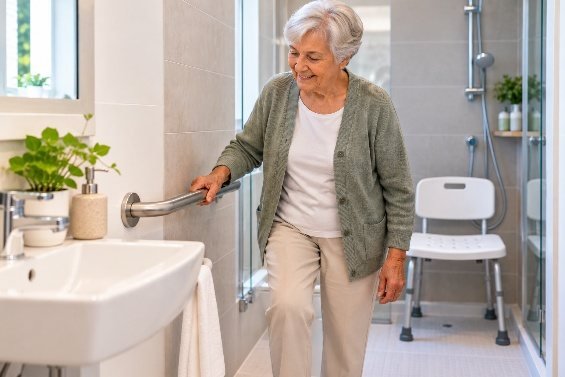
Bathrooms can be challenging when joints are stiff or balance is affected. Suitable equipment and adaptations can make washing and using the toilet easier and safer.
Options may include:
- grab rails fitted in the right places
- shower seats or bath seats
- raised toilet seats
- long-handled washing aids
- non-slip mats and other bathroom safety products
Grab rails should be positioned by someone with the right expertise and fitted securely. Towel rails and other fixtures that are not designed to take your body weight should never be used for balance.
Making everyday activities more manageable
When everyday tasks feel more manageable, people often feel more confident doing things for themselves and taking part in the activities that matter to them. Assistive equipment is only one part of staying independent. Changing how tasks are organised can help too.
For example, sitting down while preparing vegetables, splitting household jobs into shorter sessions and storing commonly used items at a comfortable height can all reduce unnecessary strain.
The aim is to find practical ways to keep doing everyday activities, with equipment and routines that suit your own circumstances.
Finding help with equipment costs
The cost of assistive equipment can be a worry. If you live with arthritis in the Reading or Wokingham area, there are several routes to explore:
- Arthros grants: eligible people can apply for funding for practical equipment that is not currently available through the NHS.
- Occupational therapy: your GP or another healthcare professional may be able to refer you for an occupational therapy assessment, which can identify the equipment and adaptations that would help you most.
- Your local council: adult social care teams can assess your needs and advise on suitable equipment and adaptations. Reading Borough Council also offers the free online AskSARA self-help tool.
- VAT relief: some equipment designed or adapted for disabled people may be sold without VAT, depending on the rules.
Support and eligibility vary, so check each service’s guidance before buying equipment or making adaptations.
Useful links:
- Reading Borough Council: equipment to stay independent
- Reading Borough Council: occupational therapy
- Wokingham Borough Council: occupational therapy team
- GOV.UK: VAT relief for disabled people
How Arthros can help
Arthros is a local charity supporting people living with arthritis in the Reading and Wokingham area. We fund practical equipment, activities and services that help eligible people get support they might otherwise struggle to afford. Where a grant is awarded, we usually buy the item directly from a trusted supplier on your behalf.
We offer two types of grant:
- Small Grant (Form B1): for individuals who need practical equipment, usually costing up to £200, to help with everyday tasks such as washing, dressing, cooking and moving around the home.
- Standard Grant (Form B2): for individuals and for groups, charities and community organisations, towards larger items, or activities and services that promote independence and wellbeing.
To apply, you need to live in our area, be aged 18 or over, and have been diagnosed with a type of arthritis.
Support for everyday independence

Assistive equipment does not need to be complicated to be useful. A suitable kitchen aid, a bathroom adaptation or advice from an occupational therapist can make everyday tasks more manageable.
For people living with arthritis in the Reading and Wokingham area, Arthros offers a local route to practical support and grant funding.
Find out about Arthros grants and apply
This article is for general information only and does not replace professional medical advice. Please speak to your GP or an occupational therapist about your own needs.